The Real Benefits of Reverse Osmosis (And When It’s Not Worth It)
Reverse osmosis pushes your tap water through a fine membrane that strains out most of what’s dissolved in it. That’s the short version. The longer version is what this guide is about.
Most articles on the benefits of reverse osmosis read like ads. You’re here because you’re asking a simpler question: should I put one of these in my kitchen? We’ll walk through what RO actually changes at the tap, what it doesn’t do, and when it earns its keep — including the situations where we tell homeowners to skip it.
Reverse osmosis removes 90-99% of dissolved solids from tap water, producing noticeably cleaner taste, less scale on appliances, and a better dollar-per-year value than bottled water over a decade. A standard under-sink system costs $400-$800 installed and runs about $0.15-$0.25 a day once you factor in filter changes. RO is worth it if you live somewhere with hard or mineral-heavy water (like Calgary), own your home, and care about taste. It’s probably not worth it if your tap already tests low, you rent, or you barely drink water at home.
The 7 Real Benefits of Reverse Osmosis
Let’s get specific. These are the benefits you’ll actually notice, in the order most homeowners notice them.
1. Removes 90-99% of Dissolved Solids
RO is the gold standard for reducing TDS. The US EPA notes that point-of-use RO systems effectively remove a wide range of contaminants, including many that standard carbon filters miss. That includes lead, arsenic, nitrates, sodium, chlorine byproducts, and dissolved salts.
If your tap is 200 ppm, a working RO system brings it under 20 ppm. That’s a measurable change, not a marketing claim. A $15 handheld TDS meter will show you the difference in seconds.
2. Measurably Better Taste
The reason tap water tastes different from one city to another is mostly dissolved minerals and chlorine. The World Health Organization’s TDS guidance notes that most people find water under 300 ppm to taste “good,” with taste quality improving as TDS drops.
RO water sits around 10-30 ppm. It tastes clean, and flat to some palates until you get used to it. Coffee and tea change noticeably because you’re tasting the beans or leaves, not the water carrying them.
3. Cleaner-Tasting Ice and Cooking Water
Here’s a concrete test: fill an ice tray with tap water and another with RO water. Freeze both. The tap cubes come out cloudy; the RO cubes come out clear. That cloudiness is dissolved solids coming out of solution as the water freezes.
The same thing happens in your cooking. RO water makes cleaner stocks, less mineral film on pasta, and a cleaner rinse on vegetables. It also makes better ice in whisky, which is the benefit no brochure mentions.
4. Less Buildup on Appliances
Dissolved minerals leave deposits. Your kettle, your coffee maker, your ice maker, your humidifier: all of them build scale over time, and scale shortens their lives. Feeding those appliances RO water slows the buildup meaningfully.
This is different from a whole-home water softener, which protects your pipes and water heater. RO protects the appliances drawing from your RO tap. Many Calgary homes run both.
5. Reliable Consistency Through Seasonal Water Changes
Municipal water quality shifts with the seasons. Spring runoff raises turbidity. Summer can bring higher chlorine dosing. Mineral levels move around as treatment plants balance supply.
An RO system flattens those swings at your tap. You drink the same water in April that you drink in October.
6. Extra Protection Layer During Local Water Advisories
When a boil-water advisory hits, RO isn’t a replacement for boiling. Bacterial contamination is a separate concern, and we’ll cover that below. But during advisories that involve chemical contamination, sediment events, or lead exposure from aging service lines, an RO system provides a second line of defense on the drinking water you rely on most.
7. Cost-Effective vs. Bottled Water
A family buying two 24-packs of bottled water a week spends roughly $60 a month, or $720 a year. A home RO system runs about $400-$800 installed, with roughly $75-$150 a year in filter replacements.
Over 10 years, bottled water costs the family around $7,200. The RO system, fully maintained, runs closer to $1,500-$2,000. That’s before the plastic-waste argument, which stands on its own.
What RO Removes (and What It Doesn’t)
We’d rather be straight with you than sell you on things RO doesn’t do.
RO reliably reduces:
- Total dissolved solids (TDS)
- Lead, arsenic, chromium, and most heavy metals
- Nitrates and nitrites
- Chlorine and chloramines (when paired with carbon stages)
- Fluoride
- Sodium and dissolved salts
- Pesticide and pharmaceutical residues
- Microplastics
RO does not reliably do:
- Sterilize water. Bacteria and viruses can sometimes slip through or colonize downstream of the membrane. If you’re on untreated well water with microbial concerns, you need UV treatment, not just RO.
- Replace municipal treatment. Your city does the heavy lifting on disinfection. RO is a refinement layer, not a substitute.
- Filter what it wasn’t designed to filter. Very specific contaminants (certain volatile organics, some radiological contaminants) need dedicated stages. Ask for a water test before assuming RO covers your situation.
Health Canada’s drinking water guidelines are the cleanest reference for what’s in Canadian tap water and what the targets are. Read them before shopping for any filter.
When RO Is Worth It (and When It Isn’t)
This is the section nobody else writes. Here’s our honest take.
RO is worth it when:
- You’re particular about taste, especially for coffee, tea, or cooking
- You live in a hard-water area like Calgary, where mineral content is high year-round
- You want a protective layer during water advisories or service-line concerns
- You run appliances (espresso machines, steam ovens, ice makers) that are sensitive to mineral content
- You’re trying to cut bottled-water spending and plastic waste
- You own your home and plan to stay 3+ years
RO is probably not worth it when:
- Your tap water already tests under 100 ppm TDS and tastes fine to you
- You rent, and your landlord won’t approve the install
- You use very little drinking water (say, a single adult who mostly drinks coffee at the office)
- You’re in a soft-water region with a carbon pitcher filter that already handles your concerns
- You can’t commit to annual filter changes
There’s no shame in skipping RO. A $40 carbon pitcher changed twice a year is the right answer for plenty of households.
Calgary-Specific Angle
Calgary tap water is safe to drink and well-treated. It’s also hard. The City of Calgary reports hardness levels between 140 and 262 mg/L, depending on whether your supply comes from the Glenmore or Bearspaw treatment plant. TDS typically falls in the 150-250 ppm range.
That’s not unsafe. It’s just mineral-heavy, and it tastes that way. It also leaves scale on every appliance it touches.
A home RO system in Calgary typically drops TDS to 10-30 ppm. For more on what’s actually in your tap, our Calgary water quality guide walks through the numbers by neighbourhood. If you want the underlying TDS concept explained simply, our TDS explainer covers it.
For homeowners who want both softened water through the whole house and polished water at the kitchen tap, a combined softener-plus-RO setup is the standard Calgary configuration. You can read more about that system on our water softener and reverse osmosis page.
What It Costs
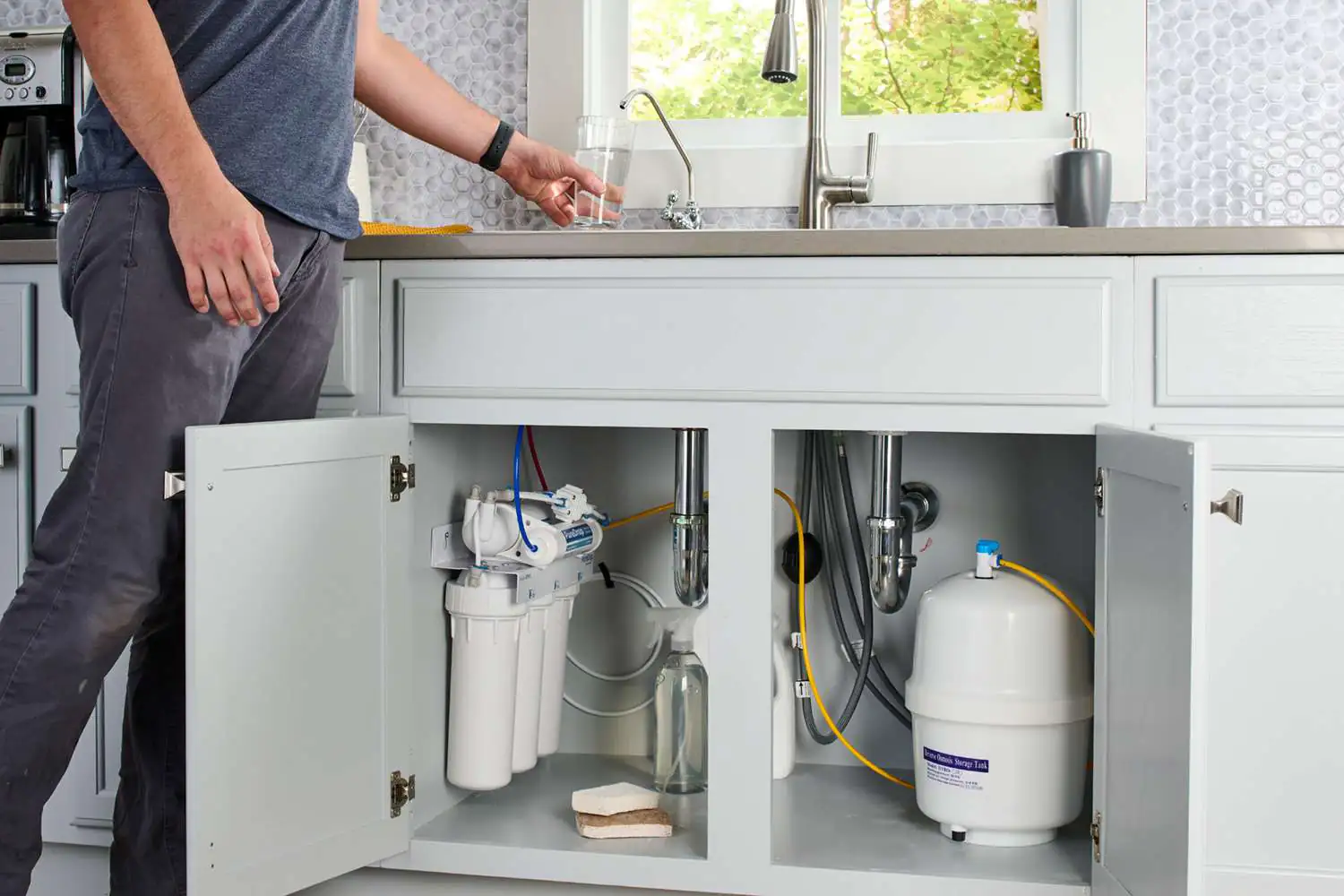
Under-sink RO systems start around $400-$800 installed for a standard 4-5 stage unit. Higher-end systems with remineralization, tank-less designs, or whole-home output run $1,200 and up.
Ongoing costs break down like this:
- Pre-filters and post-filters: $40-$80 per year
- Membrane: $60-$150 every 2-5 years
- Sanitization service (optional, professional): $100-$150 every 2-3 years
That’s roughly $0.15-$0.25 a day to run, less than a single bottle of water.
Most Calgary homes pair an RO system at the kitchen sink with a whole-home water softener. That combination addresses both hard-water damage through the house and drinking-water quality at the tap where it matters most.
Book a free in-home water assessment
We’ll test your TDS, walk through the numbers, and tell you honestly whether RO is worth it for your home.
Book Your Free Water Test or call587-792-1456Addressing Common Concerns
Frequently Asked Questions
Is reverse osmosis water safe to drink?
Yes. RO water meets and typically exceeds Health Canada’s drinking water guidelines. The very low mineral content is safe for daily drinking and cooking. People on specific medical diets should ask their healthcare provider about mineral intake.
Does RO remove beneficial minerals?
It reduces them along with everything else. The dietary impact is small because most minerals come from food, not water. If you’d prefer minerals added back, remineralization stages are available on most modern systems.
How much water does RO waste?
Modern home systems run at 2:1 or 1:1 waste ratios. For a typical household, that’s a few gallons a day of reject water, usually less than a single toilet flush.
How long does an RO system last?
The full system lasts 10-15 years with routine filter changes. Pre-filters and post-filters get replaced every 6-12 months, and the membrane every 2-5 years depending on your water quality.
Is RO better than a filter pitcher?
For deep contaminant reduction, yes. Pitchers primarily reduce chlorine and a handful of contaminants via carbon. RO addresses TDS, lead, arsenic, nitrates, and far more. A pitcher is fine for basic taste improvement. RO is the step up.
Can I install RO myself?
Many homeowners do. Under-sink kits include clear instructions and fit standard plumbing. That said, connecting to your cold-water line, installing the drain saddle, and drilling the counter for the dedicated faucet takes some confidence. If you’d rather not, a plumber can do it in about 90 minutes.
Does RO remove fluoride?
Yes. RO membranes reduce fluoride along with other dissolved solids. If fluoride is a specific concern for you, confirm the system you’re looking at has been certified for fluoride reduction.
Deciding For Your Household
The benefits of reverse osmosis are real and measurable. Cleaner taste. Less scale. Cleaner ice. Peace of mind during water advisories. Real savings against bottled water over a decade.
They’re also not universal. If your tap already tastes fine and your TDS is low, a carbon pitcher may be all you need. If you’re renting, the math rarely works. If you own, drink a lot of water at home, and live somewhere with hard or mineral-heavy tap, RO is one of the better dollar-for-dollar upgrades you can make to your kitchen.
If you’d like help deciding whether RO makes sense for your home, our team offers free in-home water assessments across Calgary, Airdrie, Cochrane, Okotoks, Chestermere, Langdon, and Bragg Creek. We’ll test your water, walk you through the numbers, and tell you honestly whether an RO system is worth the investment for your household — or whether you’d be fine without one.
Call us at 587-792-1456 or book a free water assessment. Thirty years in Calgary, 4.9 stars on Google, and no pressure to buy anything you don’t need.
Refer a friend
Know someone who needs us?
Send someone our way and we pay you for it. Cash out in seven to fourteen days — no points, no credit against a future job.
- $100your first system referral
- $150your second
- $200every one after that
- $25any install, service or repair
System referrals apply to a complete heating and cooling system purchase. Terms and conditions apply.
Read us first on Google. Add Alberta Indoor Comfort as a preferred source and our Calgary home-environment articles are more likely to appear in your Top Stories and AI Overviews.
Add albertaindoorcomfort.com as a preferred source on Google